

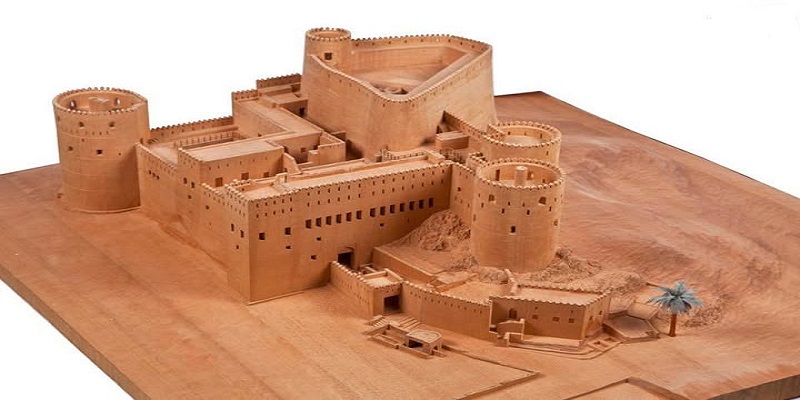
An Architectural Masterpiece Narrating Oman's Grand History
Rustaq Fort stands as one of the largest and most ancient Omani forts, majestically positioned at the foothills of the Western Hajar Mountains, surrounded by palm oases and falaj waterways, forming a historical tableau that embodies seven centuries of Omani defensive architecture.
Location of Rustaq Fort
The fort is located in Rustaq, South Al Batinah Governorate, approximately 160 kilometers west of Muscat. It can be accessed via the Rustaq-Awabi road which passes through scenic mountain passes and orchards of lemons and pomegranates.
History and Construction
The fort dates back to the 13th century when it was built by Imam Nasser bin Marshed Al Ya'arubi, then expanded during the reign of Imam Sultan bin Saif Al Ya'arubi (17th century). It underwent comprehensive restoration in 1987 by order of Sultan Qaboos bin Said.
Fort Components
The fort is distinguished by its massive terraced design:
Two grand gates (Al Hala Gate and Middle Gate) adorned with Islamic decorations
Traditional cooling system through intelligent air vents called "Mazajen"
Water wells reaching 30 meters deep and storage for ammunition and provisions
An ancient mosque and Quranic school dating back to the Ya'arubi era
A museum displaying the fort's history from the Ya'arubi to the Al Busaidi period
Activities to Enjoy
Visiting the internal museum showcasing manuscripts and traditional weapons
Climbing to the top of the Red Tower for panoramic views of the Hajar Mountains
Observing the intelligent defense system through hot oil pouring openings
Visiting Rustaq's traditional market to buy pottery and local dates
Enjoying evening light shows that narrate the fort's history
Historical and Touristic Significance
The fort played a pivotal role in Omani history as:
A scientific and cultural center famous for its school of jurisprudence and scholars
An impregnable fortress against Portuguese invasions in the 16th century
One of UNESCO's World Heritage Sites
A unique model of water system (aflaj) integration with defensive architecture
Visitor Tips
Visit in the morning to avoid crowds
Utilize the tour guides available on site
Visit on Sundays and Wednesdays to see heritage performances
Don't miss trying Omani dates and coffee in the main courtyard
Take photos from the front courtyard with the mountain backdrop
Conclusion
Rustaq Fort is not just a historical building, but a living testament to Omani civilization's greatness. It offers visitors a journey through time showcasing military engineering brilliance and unique architectural taste. Whether you're interested in history, photography, or architecture, the fort will amaze you with its grandeur and intricate details that tell stories of centuries of glory.
Rustaq Fort Location on Google Maps